The Engineered Economy of the Casino Floor
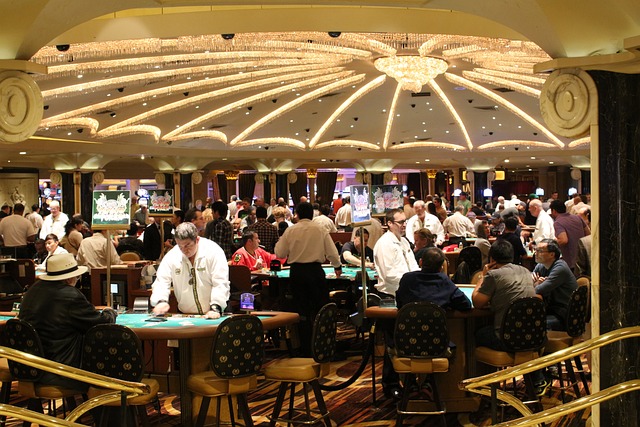
A casino is not simply a place of play. It is a live economic system, calibrated down to the second. Every movement, delay, sound, and visual cue operates as part of a finely tuned machine—not metaphorical, but measurable. The stakes are not only on the table; they’re embedded in the architecture, in the code, in the flow.
Platforms like HellSpin casino replicate this model in digital form. The chips may be virtual, but the logic is identical: attract, retain, convert. The player’s attention is a resource, extracted and reinvested through loops of anticipation and reward. The house’s edge is no longer a secret; it’s a system.
Unlike most industries, casinos deal not in goods or services but in probabilistic returns. The product is the environment itself—an optimized sequence of triggers designed to extend engagement without resistance.
Metrics That Shape Experience
Nothing in a casino happens without being measured. Session length, average bet size, return frequency, win/loss variance—all are data points in a real-time model. These figures aren’t static; they drive immediate feedback. If dwell time drops, lighting adjusts. If a machine underperforms, bonuses are tweaked.
The system reacts faster than players can. What appears organic is often the result of simulation-tested inputs. In digital environments, this responsiveness increases tenfold. A user hesitates, the interface adapts. A user leaves, the system notes why.
In this world, metrics are not for review—they’re for design. The game isn’t balanced once. It is balanced continually, to ensure the illusion of fairness without ever disrupting the long-term profitability curve.
Gamification and Non-Financial Triggers

Casinos long ago realized that money alone doesn’t drive behavior. Today, they deploy non-monetary incentives—status tiers, points, progression bars, visual milestones. These are mechanics borrowed from mobile gaming, refined for conversion efficiency.
The psychology is straightforward: players seek momentum. They don’t need to win large amounts—they need to feel forward motion. Every spin, loss, and bonus is framed within a larger structure of progress. This scaffolding makes exits less appealing. Even failure becomes part of the plan.
What began as a place to win has become a place to stay.
Volatility Without Chaos
Gambling markets depend on tension. But tension must remain bounded. True randomness would alienate users. The casino’s genius lies in its ability to deliver volatility while containing disruption.
This is achieved through design: payout ratios, bonus intervals, and game speed are all manipulated to simulate variability while maintaining predictability. The player experiences uncertainty, but the system does not. It functions like a financial derivative—risk packaged within control.
In this way, the casino becomes a mirror of late capitalism: frictionless surfaces, complex backends, and an unwavering emphasis on yield.
Labor, Extraction, and Efficiency

What’s often missed in public debates around casinos is their role as labor models. Players are unpaid workers. Their engagement—measured in minutes, clicks, stakes—generates continuous value. The system captures time, not just money.
Even when the player “wins,” the house records that win as data: how it occurred, when it happened, what came before. That information becomes part of the next version of the game. The environment is not static. It evolves. And it evolves faster than the player does.
Casinos, especially digital ones, are self-correcting economies. The margin is preserved not through cheating, but through iteration.
The Hidden Architecture of Yield
In the end, the casino is a factory—one that produces nothing but movement. Every inch of its surface is calculated. Every delay is useful. Every outcome serves the system.
Players may experience luck. The house, however, experiences only margin. And that margin is protected not by force, but by foresight—by an infrastructure that learns, adapts, and tightens.
It doesn’t need to chase profit. It’s already built for it.